Both games push lanes and reward last hits, but Deadlock is 6v6 in third person with guns. Side-by-side on team size, match flow, economy and learning curve.
Deadlock vs League of Legends: Key Differences
Deadlock and League of Legends are the same genre seen from different sides of the screen: three lanes, timed minion waves, last hits, an item build and a base you break to win. The differences that decide which one you play are team size (six heroes a side in Deadlock, five in League), perspective (third-person crosshair gunplay versus a fixed top-down camera), economy (souls you can deny and partly drop on death versus gold that only flows in), and access (an invite-only Valve playtest with no price versus a game free to install since 2009). Facts below are checked against Valve's Steam record and Riot's own site on October 10, 2026; what Deadlock actually is covers the genre label.
- Team size: 6v6 in Deadlock, 5v5 in League.
- Camera and combat: aiming a gun in third person versus clicking abilities from above.
- Economy: souls, half of every trooper denyable and some droppable on death, versus gold that accumulates safely.
- Access: invite-only playtest, versus free download today.
The two games at a glance
| Deadlock | League of Legends | |
|---|---|---|
| Developer | Valve | Riot Games |
| Team size and map | 6 per side, three city lanes | 5 per side, three lanes plus a jungle |
| Perspective | Third person, gunplay with a crosshair | Top-down, fixed camera, cursor-aimed abilities |
| How you win | Break Guardians, Walkers and Shrines, then ritual the Patron | Break the Nexus |
| Income | Souls from troopers, camps and objectives; half the flying orb is deniable | Gold from last hits, kills and objectives |
| Roster | 38 heroes confirmed before the September 29, 2026 update, plus six more unlocking one at a time by community vote, two a week through October 20 | Over 170 champions |
| Ranked | Ranked Mode since July 30, 2026, behind 60 Standard wins | Ten-tier ladder, Iron through Challenger |
| Modes | One flagship mode plus 4v4 Street Brawl | Summoner's Rift, ARAM on Howling Abyss and rotating modes |
| Price and access | No price, friend invites via playtesters, Windows only | Free to play |
| Release | Coming soon, date To be announced | Released October 27, 2009 |
Official source: Deadlock on Steam — app record re-checked October 10, 2026: coming soon, release date "To be announced", no price with no packages, Windows only, and the store notice still reads "Access to Deadlock is currently limited to friend invites via our playtesters."
Official source: Champions - League of Legends — "With over 170 champions in League of Legends", page checked October 10, 2026. Riot's official site leads with a 5v5 team game you can play for free.
This matters more than any mechanic. League of Legends has been free to download since its release on October 27, 2009. Deadlock cannot be bought at all: the Steam record shows no price and no packages, and entry is a friend invite from someone already inside the playtest, still true on October 10, 2026. If the invite is your blocker, how to actually get a Deadlock invite is the page that matters.
Same three lanes, two different screens
League's flagship map splits five players the classic way: one top, one mid, two bot and one jungler farming the camps between the lanes. Players in a lane kill minions to accumulate gold and XP — the community calls it farming — and try to stop their opponent doing the same. Matches on Summoner's Rift run from 15 minutes to over an hour, and the camera never moves, so every fight is decided with information the screen hands you for free.
Deadlock keeps the three lanes and replaces the jungle with a vertical city. Two heroes start in each lane, then leave for wherever the souls return best; ziplines above the streets move you across the map, and neutral camps sit between the waves. Because you hold the camera, every fight also has geometry: cover, corners, rooftops and sightlines from angles a top-down game never has. The lanes and districts guide carries the current street layout, and marks which lane names come from Valve and which from the community.
Economy: gold versus souls
Both games gate power behind farm, and both reward the player who last-hits cleanly. In League the wave settles when the last minion falls: gold accrues from the killing blow and from kills and objectives, and the design has been described the same way since the game's first years — "known for not including things like denying and gold loss on death" (GameFAQs thread, 2013). What you bank stays banked.
Deadlock's wave pays twice. A trooper kill is worth 100 plus 2 per minute as of the June 30, 2026 patch, the bounty splits between a ground orb that flies to whoever stands close and a rising flying orb anyone can shoot, and since that same patch the flying half — 50 percent, up from 40 — can be shot out of the air by the enemy. The souls guide walks through the split, the 18-meter ground capture radius and why ping makes orb fights feel rigged. Camps and objectives pay unsecured souls, which drop on death above a floor of 50 plus 5 per minute (June 30, 2026). Power also arrives in jumps rather than a curve: the Investment tracks hand out bonuses at fixed soul totals — 4.8k, 6.4k, 8k, 11.2k, 16k as of the May 22, 2026 patch.
Match flow: rhythm, respawns and length
Deadlock's waves are the clock on the match. Past the 35-minute mark troopers arrive every 20 seconds (Valve's March 6 and May 22, 2026 notes), the respawn ramp runs 8 to 35 seconds between minutes 5 and 20 as of the June 30, 2026 patch, and a death at the 20-minute mark costs 38 seconds after the September 16, 2026 balance pass. The win condition is a chain you cannot skip: Lane Guardians, Walkers, the Base Guardian pair, the Shrines, then the Patron and the ritual on top — how matches actually end has the rule that decides a lot of lost games. Community match trackers, which are not Valve figures and move with every patch, put the average game near 38 minutes, with one in ten running past 48.
League is faster on average and flatter in shape. A third-party tracker lists the Silver average at 30:30 across roughly 2.5 million matches on patch 16.20 (game duration stats), which sits inside Wikipedia's range of 15 minutes to over an hour per game. Lane assignments also hold longer: you are married to your lane through the early game, then the five of you move together toward neutral objectives, instead of Deadlock's constant splitting where two hold a lane while four farm camps and hunt.
What transfers when you switch
The farm layer moves with you. Last-hitting discipline, wave timing, map awareness, item builds and playing around power spikes are the same skills in both games, and a League player who understands when a wave will push already reads Deadlock's lanes correctly. A first-three-matches walkthrough covers the minute-by-minute shape of a Deadlock opening.
The screen does not move with you. Deadlock wants a crosshair on moving targets, stamina spent on movement — dash jumps cover 19 meters as of the June 30, 2026 patch, alongside slides and wall jumps (movement numbers here) — and positioning treated as geometry rather than a circle on a board. Standing still is worse, and the enemy can be anywhere on the vertical axis. The other direction is knowledge, not aim: reading over 170 champions on sight is League's wall, while Deadlock's ranked mode, live since July 30, 2026, asks for 60 Standard wins and three heroes with 15 wins each before you can queue (ranked details).
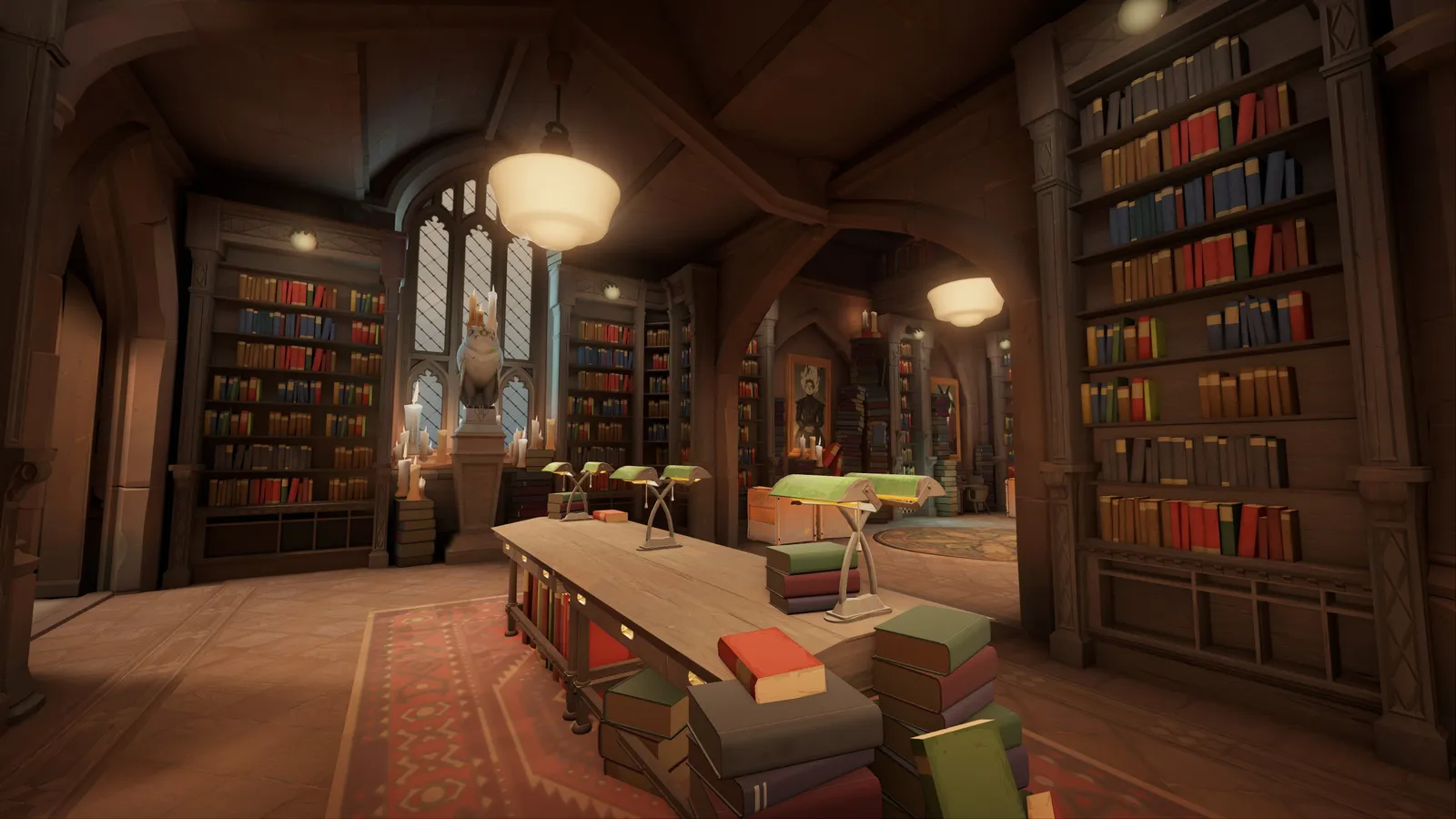
Your last-hitting discipline and wave sense transfer on day one. What kills new Deadlock players is treating the screen like a board you own: the first ten minutes are about keeping wave income flowing while staying alive in 3D, where a shot can come from a window you never checked. Learn the stamina and deny rules before you learn a build.
Which one you should play
- Choose League if you want a game you can install right now, a roster past 170 champions, a ranked ladder with a decade of history, and matches that usually land around half an hour.
- Choose Deadlock if you want gunplay and movement inside a MOBA economy, do not mind longer games and an unfinished build, and can get an invite. Valve's store page still calls it an early development build with temporary art and experimental gameplay (October 10, 2026).
- Still deciding: is Deadlock worth playing in 2026 argues the trade-off; the Overwatch and Marvel Rivals comparison covers the shooter side.
FAQ
Is Deadlock just League of Legends in third person? No. The skeleton — lanes, waves, last hits, items, a base to break — is the shared MOBA inheritance, and Steam's tag list puts MOBA next to Third-Person Shooter and Hero Shooter on the same store page. IGN's beginner guide calls it a MOBA like Dota 2 in third-person-shooter format, and Valve's own FAQ points at Dota for the lineage. The shooting, movement and deny layer has no League counterpart.
Is Deadlock 5v5? No, it is 6v6: six heroes a side across three lanes, which is also why matches carry more simultaneous lanes of pressure than a League game. What Is Deadlock has the full format breakdown.
Can I play Deadlock today if I already play League? Only with an invite. As of October 10, 2026 the Steam record still shows the game coming soon, unpriced and limited to friend invites from playtesters; League, meanwhile, is free to install today. The invite path is covered in how to get a Deadlock invite.
Which game is harder to learn? Different hard. Deadlock stacks aim, stamina movement and MOBA macro at the same time, so your first matches are rough even if your aim is good. League front-loads knowledge instead: 170-plus champions to recognize, matchups to know, and a ten-tier ladder to climb, but you can contribute in your first game with no shooter skills at all.
Do Deadlock matches run longer than League matches? Usually. Community trackers put Deadlock near 38 minutes on average against the 30:30 League figure above, and both games keep an hour-plus tail.
Related Guides
- What Is Deadlock? — the genre question this whole comparison rests on.
- Deadlock Souls Guide — the deny and orb rules, in full.
- Deadlock Lanes and Districts Map — the street layout after the map rework.
- Deadlock vs Overwatch 2 and Marvel Rivals — the same exercise from the shooter side.
- Is Deadlock Worth Playing in 2026? — the trade-off, stated plainly.
More Deadlock Guides
How many heroes Deadlock has right now, who the 2026 vote rounds added, and how to pick a role instead of memorising a tier chart.
You cast one hero vote per Standard or Street Brawl match at the Pregame ballot box. The winning team counts double, first win of day doubles again.
Where each setting lives: the FOV slider and the config workaround past 90, the new health bars, and the keybinds players change most.
How the Deadlock shop works: slot counts, the Weapon, Vitality and Spirit categories, tier names and filters - what Valve publishes and what it never has.
Three lanes, four new Districts between them, and the Haunts that spawn in each. What City Never Sleeps changed about where you fight.
Average Deadlock games run about 38 minutes, with 10% going past 48. Laning, mid game and Street Brawl rounds timed, with the patch each figure came from.
Every tier list is stale within a patch. How to judge strength from mobility, damage and role fit instead of copying a chart.
Mid Boss spawns from the first minute and drops the Rejuvenator. Its HP, bounty, debuff resistance and the three-minute buff, all sourced and dated.