
Ranked landed in July 2026. How the badge tracks hidden MMR, what placements cost you, and why a 45% winrate still climbs.
Deadlock Ranked and MMR: Ranks, Placements, Climb
Deadlock ranked is live, and it is not the ladder most guides describe. Valve rebuilt it in the Matchmaking Update posted on July 30, 2026: a visible twelve-name ladder from Obscurus to Eternus, six subranks each, and a Rank Points bar moving roughly 250 points a game against what the matchmaker expected. Your winrate alone does not move it.
Official source: Valve, "Matchmaking Update," July 30, 2026 — verbatim post mirrored on SteamDB patch notes, published to Deadlock on Steam.
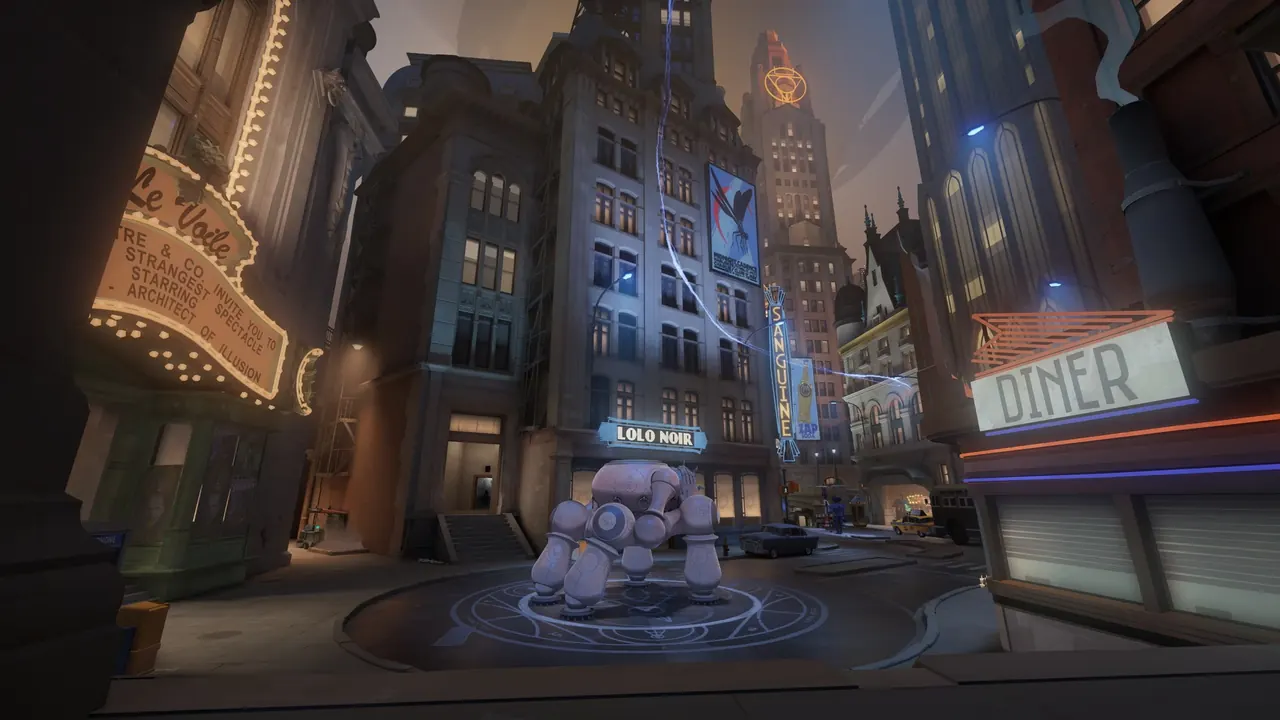
When Deadlock ranked shipped, and what it replaced
Deadlock has had a ranked ladder since October 2024, so any page claiming the mode does not exist is two years out of date. What changed on July 30, 2026 is that Valve rebuilt it: one queue split into Standard (unranked) and Ranked, the ladder published for the first time, and the old hidden rating replaced by a visible points bar.
The retired ladder used different names and they still dominate the search results. Alchemist, Arcanist and Archon no longer exist. They sat between Seeker and Ritualist; Valve replaced them with Acolyte, Sentinel and Mystic. UpForge's ranked explainer still publishes the old order.
The rank ladder, tier by tier
| # | Rank | Note |
|---|---|---|
| 0 | Obscurus | "Uncalibrated" — the pre-calibration state |
| 1 | Initiate | |
| 2 | Seeker | |
| 3 | Acolyte | Added 2026-07-30 |
| 4 | Sentinel | Added 2026-07-30 |
| 5 | Mystic | Added 2026-07-30 |
| 6 | Ritualist | |
| 7 | Emissary | |
| 8 | Oracle | Calibration ceiling |
| 9 | Phantom | |
| 10 | Ascendant | |
| 11 | Eternus | Percentile-based, no fixed point costs |
Every rank carries six subranks, I through VI. Trackers advertising "11 ranks" skip Obscurus, a placeholder rather than a rung. Check the heroes roster before worrying which heroes you can queue.
Ranked requirements: 60 wins, 15 wins per hero, 3 heroes
Valve's requirement list, quoted: "at least 60 wins in the Standard Mode," heroes "you have won at least 15 games with in Standard Mode," and "at least 3 heroes unlocked for Ranked."
| Requirement | Number |
|---|---|
| Standard wins | 60, total across all heroes |
| Wins per hero | 15, counted separately per hero |
| Heroes unlocked | 3, the minimum roster to queue |
The per-hero split is what catches people. "I have 60 wins, why is my ranked button grey" almost always means those wins all went to one hero, leaving two qualified. Clearing that is a farming problem: see the souls economy guide, and your first three matches if you are still new. Active sanctions also block queueing.
What moves your rank: points, thresholds, loss protection
This is the part Valve documented, and it is arithmetic rather than mystery.
| Rule | Published value |
|---|---|
| Points per result | "+/- 250 points on average" |
| Next subrank | 1,000 Rank Points |
| New rank (Mystic VI to Ritualist I) | 2,000 Rank Points |
| Above Eternus I | Thresholds "dynamically updated daily" on a percentile basis |
| Loss protection, rank boundary | 5 games (Mystic I at 0 points survives 5 losses) |
| Loss protection, subrank boundary | 2 games |
Two things fall straight out. One subrank is four net wins, so a rank boundary is eight. And at an even 50/50 record with symmetric 250-point swings you net zero and never move: the badge measures results relative to expectation. Valve adds that the swing varies "while on win streaks" — the only mention of streaks in the post, unpublished in size, and the gap the community argues about below.
Placements: the 8-game calibration and what carries over
There are no traditional placements. Everyone enters "a calibration phase for 8 games" at season start, and "you cannot be in a party during calibration matches." Prior games do count: Valve describes "a soft reset of your prior Rank, maintaining some history of your previous performance relative to other players to help seed you initially into the calibration games." History seeds you, then eight fresh games overwrite it. What you cannot do is skip it — "Players can only exit calibration at a max Rank of Oracle VI." Eight perfect games still top out at Oracle VI on the way in, so treat the first eight as damage control rather than an audition.
The "hidden MMR" phrasing in third-party guides mostly describes the retired system. UpForge writes that "Deadlock uses a hidden MMR that runs in parallel with your visible badge," seeded into placements by prior games. Valve's post never uses the phrase and publishes no rating number. A guide promising an MMR number is describing the retired system or guessing.
How to check your rank and MMR in 2026
There is no MMR number, because Valve does not show one. Three reads do: Rank Points after each match, with a visible progress bar; the Ranked Hub in the hideout, holding season info, global leaderboards and your Rank history page; and the pre-game waiting area, where "you will see a breakdown of the Ranks of all players in the game" — which is why you can now tell whether a lobby is stacked. Rank history permanently records the peak you hit in a finished season. Leaderboards add their own gates (75 games in the last 30 days globally, up from 50; 30 games plus 100 lifetime wins on a hero), and trackers such as tracklock.gg publish distribution data — useful for the shape of the ladder, useless as an MMR readout.
Why a 45% winrate still climbs, and why the number is disputed
The number everybody quotes comes from an r/DeadlockTheGame thread, "You will climb in Deadlock ranked with a 45.2% winrate," whose premise is that "you will climb if your winrate is above ~45.2%, a scenario in which you are significantly worse than other players in each lobby." It was still being cited months later by players sitting on a sub-25% winrate over 40 games without dropping.
The arithmetic underneath is real. Valve published a symmetric average of 250 points, but also loss protection costing five games at a rank boundary and two at a subrank boundary. Points bleed through those shields before a badge does, and streaks add to the win side, so a sub-50% player with a live streak bonus and unspent shields can sit net-positive for a long stretch. That is a derivation from Valve's own numbers, not a Valve statement — and the streak bonus itself is unpublished.
Do not treat 45.2% as a constant: a circulated video puts the floor nearer 37%, and other players report grinding at 60% and calling it slow. None of that comes from Valve. The defensible claim is the one above — rank tracks results relative to your lobby, so climbing while losing more often than you win is possible, and no community figure is a guarantee.
Play volume inside a hero pool you are genuinely strong on, since the ladder calibrates around hero experience too. Bank souls early so teamfight power arrives on time, and learn to read your own numbers before believing a chart — the meta page for beginners covers evaluating a patch yourself.
Valve's post ends the first season "on October 7th" — four days out as of this page's October 3 update — and saves your peak rank to history permanently. Some players report in-game text showing October 8, unresolved by any announcement.
Parties, swaps, bans and abandons
Solo or duo. Duo partners must be "at most 1 Rank away from each other," Eternus players limited to another Eternus player within three subranks. Valve conceded the limits are "too restrictive." The pre-game area lets you swap once to any unlocked, unselected hero and adjust your lane, and nothing after — no zipline-swap, pause disabled until two minutes in, bans up from two to three. Valve is explicit this is composition repair, not counter-picking.
Abandons are harsh. Leaving before five minutes voids the game "for all players except the leaver and their party" and counts as their loss. Penalties "escalate to increasing amounts of low priority games," and low priority locks you out of ranked.
What the ladder does not measure
Ranked scores the game, not the win: clean laning and denied souls on a losing team earned what feeding did. The souls guide covers farming, dash, slide and mantle timing is the skill floor that holds a lane, and how matches end explains the objective chain ranked nominally measures.
FAQ
When did Deadlock ranked mode launch? July 30, 2026 at 19:14 UTC, first season starting the same day. Press coverage is dated July 31.
Is there an MMR number I can check? No. Rank Points, your badge, a per-player rank breakdown pre-game and a permanent Rank history page — but no rating value.
Does a 45% winrate really climb? It can. The 45.2% figure is a community derivation from Valve's point values, streak bonus and loss protection. Valve published no threshold, and community sources put the floor from 37% to above 50%.
More Deadlock Guides
You cast one hero vote per Standard or Street Brawl match at the Pregame ballot box. The winning team counts double, first win of day doubles again.
Three lanes, four new Districts between them, and the Haunts that spawn in each. What City Never Sleeps changed about where you fight.
Every tier list is stale within a patch. How to judge strength from mobility, damage and role fit instead of copying a chart.
Stamina, dash into slide, slide hop, mantle and wall jump - the movement tech that decides fights, explained as mechanics.
Rat King landed Oct 2. The next five City Never Sleeps heroes drop Tuesdays and Fridays at 2pm PT through Oct 20, in the order players vote.
Destroy Guardians, then Walkers, expose the Patron, and burn it down. Why the Archmother pit punishes grouped pokes.
Deadlock is CPU-bound on Source 2. Shader cache, launch options, and the graphics settings that actually move teamfight frames.
Rat King is live since Oct 2, 2026. What Scrap Grenade, Swarm of Rats, Royal Pestments and Banner of Rattania actually do, and where he fits.