A comparison table on match length, economy, map pressure and required skill, plus who Deadlock actually loses to.
Deadlock vs Overwatch 2 and Marvel Rivals: Which?
Deadlock is the odd one out: if you want a six-on-six hero-shooter match you can download today and finish in ten minutes, both rivals do that better, and neither makes you learn a farming economy first. The useful comparison is not Deadlock versus Overwatch — it is MOBA versus hero shooter, with a shooter bolted onto the front. Figures below are from the City Never Sleeps build of September 29, 2026, checked against Valve's materials on October 3, 2026; what Deadlock actually is covers the genre label.
The decision table
| Deadlock | Overwatch 2 | Marvel Rivals | |
|---|---|---|---|
| Team size | 6 per side | 5 per side; Blizzard moved the core experience back from 6v6 to 5v5 | 6 per side |
| Match shape | Three lanes, linear, trooper waves on a timer | One map, one objective, both teams usually in the same fight | Objective modes on rotating maps, including Convoy payload runs |
| Typical length | Long; built to run past the point an Overwatch round is over | About 10 minutes on average | Short by design; the official site sells "fast-paced 6v6 combat" |
| In-match economy | Yes: souls buy items and feed Investment tracks | None in the core modes; Stadium adds a light economy and purchasable upgrades | None |
| How you win | Destroy the lane buildings, then the Patron | Hold or capture the objective | Hold, capture or escort it |
| What decides it | Macro — economy lead, wave timing, deny | Aim, hero swap, positioning | Team-Up ability timing and target focus |
| Getting in | A Steam friend invite from a playtester. No public sign-up | Download it | Download it |
| Skill floor | MOBA macro, shooter aim, stamina management | Hero knowledge and aim | Hero knowledge and Team-Up timing |
| Mode variety | One flagship mode plus 4v4 Street Brawl | The widest mode library of the three | Seasonal rotation of objective modes |
Deadlock column: Valve's City Never Sleeps page and Steam app record, checked October 3, 2026. Rivals: Esports Insider's head-to-head and Marvel Rivals' own site.
Official source: Deadlock on Steam — "Access to Deadlock is currently limited to friend invites via our playtesters," checked October 3, 2026. The app record for 1422450 also reports is_free as false with no packages: nothing to buy, no queue to join.
Match length and pacing
Overwatch is a ten-minute game: almost no downtime, the whole team pointed at one objective, ultimates breaking stalemates. Deadlock inverts that. Six heroes start paired in three lanes, then go wherever the return is best, which the same comparison calls the full linear MOBA experience. The respawn ramp shows the shape — 8 to 35 seconds between minutes 5 and 20, and 38 seconds at the 20-minute mark as of the September 16, 2026 patch. If your session budget is twenty minutes, pick Overwatch.
The economy is the real divider
This row decides the comparison: every Deadlock hero starts weak and scales on souls from trooper waves, Haunt camps and objectives on a clock. Trooper bounties run 100 plus 2 per minute as of the June 30, 2026 patch, half the flying orb is deniable, and the Investment tracks jump at fixed thresholds — 4.8k, 6.4k, 8k, 11.2k, 16k — instead of ramping smoothly. IGN's beginner guide puts it plainly: the key difference for anyone coming from Overwatch is that every character starts weak and becomes powerful as you accumulate resources, so you choose how to spend it and where.
Neither rival has that. Overwatch's core modes have no shop; the closest thing is Stadium, which esportsinsider describes as MOBA elements brought in through a light economy and purchasable upgrades. Marvel Rivals has no in-match currency loop either — what it has is the Team-Up combo system its own site leads with. That is why a Deadlock win condition can look, to an Overwatch player, like refusing to fight. The souls guide covers the farming and deny rules.
How the win condition is framed
Overwatch and Marvel Rivals both frame a match as one objective with clear rules: hold it, capture it, escort it. Deadlock frames it as a chain you cannot skip: Lane Guardians, then Walkers, then the Base Guardian pair, then two Shrines that stay invulnerable until one pair of Base Guardians dies, then the Patron and the ritual on top. How matches actually end has the pit rule that decides a lot of lost games.
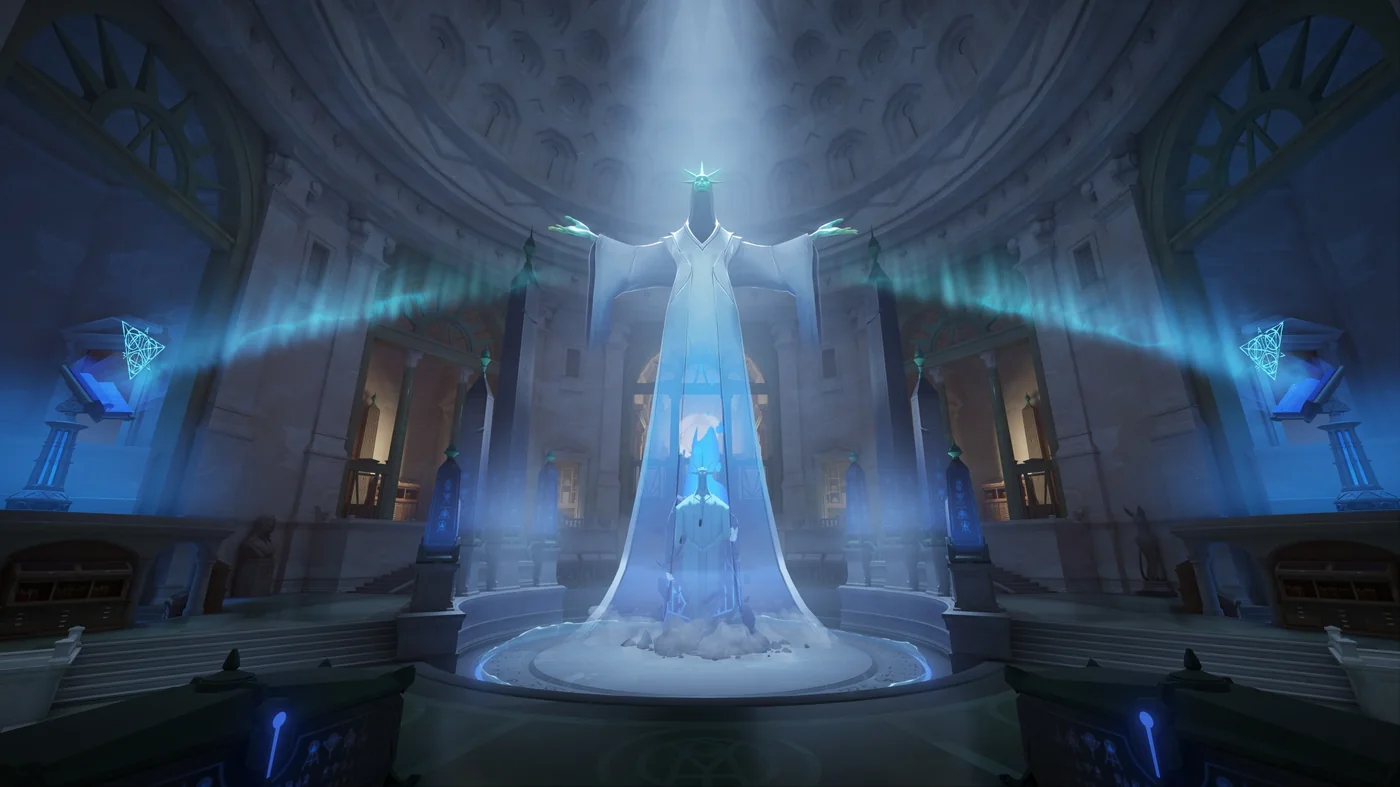
That chain is why map pressure looks different: two heroes hold a lane while waves push, four more farm camps and gank, and full team fights are a late event rather than the default — esportsinsider calls that macro the real skill ceiling. Overwatch pressure is spatial instead: hold the high ground, deny the flank, force the fight onto your terms. Lane counts in older guides are also out of date; the current map guide has the post-rework version.
Which one is harder to learn
Overwatch, comfortably. A new player queues, presses fire, and contributes inside one match. In Deadlock a new player is not useful for the first ten minutes even with good aim, because the wave is the income and the orb has to be shot or denied — one community farming guide puts early souls at half from securing orbs. On top sit a build to assemble, Investment thresholds to time, three stamina bars, and a movement tech layer rivals do not have. esportsinsider concedes the point: Deadlock is worth playing if you can get through the steep learning curve.
It is the one Deadlock mode with no economy to understand: 4v4, best-of-five, each round a couple of minutes, equal resources, no farming. It teaches movement, timing and power spikes without the laning phase, and since the September 29 patch you also get a Corrupted item after the Round 5 draft. The mode rules are short.
Movement: where the fandom actually fights
This is the one axis where the community is genuinely split, and both sides have a point. Deadlock's movement has inertia: momentum carries, so you stop before you change direction and read a target's path instead of tracking instant strafes. In a September 3, 2024 thread on the Overwatch forums titled "Deadlock is surprisingly mid, not an Overwatch killer," one poster wrote that Deadlock's movement is "just far superior to overwatch" and that it would take players from games like TF2 and Smite; another answered that calling it better is laughable, because every Deadlock hero has the same generic slide and dodge while Overwatch gives each mobility hero something distinct. The Deadlock side argues depth instead — double jumps, jump dodges, timed slide jumps, ledge mantles, wall jumps that cost stamina regeneration for 5 seconds, and items that add more — with Valve's own numbers in the movement guide. Either way the effect is aim comfort: Deadlock's weightier strafing makes tracking a target calmer than instant-strafing in a shooter built around it.
Where Deadlock actually loses
- Access, and it is not close. No price on Steam, cannot be purchased, entry is an invite from someone already in. Marvel Rivals is free on Steam (app record 2767030, is_free true) and needs nothing. If that gate is your problem, how to actually get a Deadlock invite is the page that matters.
- Mode variety. esportsinsider scores Overwatch 10 to 7 here, calling it the benchmark for varied live-service modes, and its overall verdict goes 44 to 42 to Overwatch.
- Stability. Frame-rate drops and freezes are Deadlock's own problem, reported most around bases and late-game structures — a Source 2 issue rather than a settings one, with a dedicated fix list.
- Onboarding. Polygon calls Deadlock's basic training "admittedly skimpy" — but Blizzard teaches you nothing in Overwatch either.
FAQ
What game is Deadlock most similar to? Its own FAQ section answers Dota 2, adding that heroes and mechanics are heavily inspired by Dota. Every comparison agrees: the economy, lanes, item shop and win condition are the borrowings, not the shooting.
Is Marvel Rivals closer to Overwatch than Deadlock is? Yes, and players said so at the time. In that same 2024 thread one poster put it directly: the crossover between Deadlock and Overwatch is nowhere near as clear as Marvel Rivals' overlap with Overwatch, because Deadlock is a MOBA underneath the shooter.
Can I play Deadlock without an invite? Not as of October 3, 2026. The store page reads Release Date: To be announced with access limited to friend invites via playtesters, and Valve's City Never Sleeps post lists Midboss, Guardians, Walkers and hero remodels as work still to come.
Related Guides
- What Is Deadlock? — the mental model this page compares against.
- How to Get Deadlock Invite in 2026 — the one hard blocker here.
- Deadlock Souls Guide — the economy that separates the three.
- Is Deadlock Worth Playing in 2026? — the trade-off, stated plainly.
More Deadlock Guides
You cast one hero vote per Standard or Street Brawl match at the Pregame ballot box. The winning team counts double, first win of day doubles again.
Three lanes, four new Districts between them, and the Haunts that spawn in each. What City Never Sleeps changed about where you fight.
Every tier list is stale within a patch. How to judge strength from mobility, damage and role fit instead of copying a chart.
Stamina, dash into slide, slide hop, mantle and wall jump - the movement tech that decides fights, explained as mechanics.
Rat King landed Oct 2. The next five City Never Sleeps heroes drop Tuesdays and Fridays at 2pm PT through Oct 20, in the order players vote.
Destroy Guardians, then Walkers, expose the Patron, and burn it down. Why the Archmother pit punishes grouped pokes.
Deadlock is CPU-bound on Source 2. Shader cache, launch options, and the graphics settings that actually move teamfight frames.
Ranked landed in July 2026. How the badge tracks hidden MMR, what placements cost you, and why a 45% winrate still climbs.